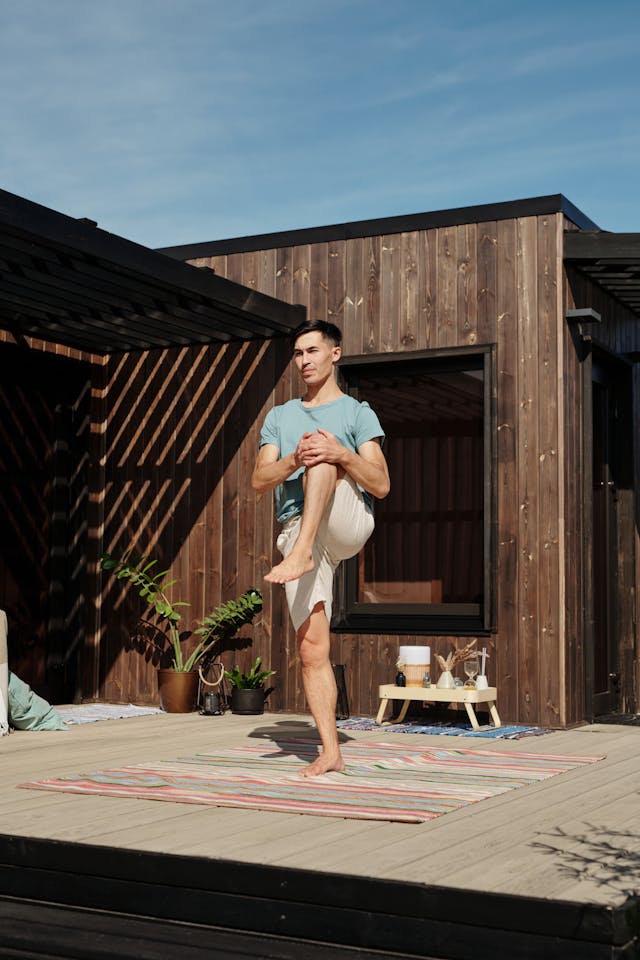
3 Keystone Habits That Can Transform Your Health in 2026 – and Make Everything Easier

3 Keystone Habits That Can Transform Your Health in 2026 – and Make Everything Easier

Claremont Colonic Center
Dana Santas, known as the “Mobility Maker,” is a certified strength and conditioning specialist and mind-body coach in professional sports, and is the author of the book “Practical Solutions for Back Pain Relief.”
Every January, more than half of resolution makers start the same cycle: setting lofty goals with high motivation only to slip back into old routines before summer begins.

That cycle occurs not because people lack discipline. It’s because most resolutions rely on willpower alone, asking us to make sweeping changes without altering the systems that support daily behavior. Willpower is manually motivated. Habits, on the other hand, are automatic.

That’s where the concept of keystone habits can make all the difference.

Coined and popularized by Charles Duhigg in his book “The Power of Habit: Why We Do What We Do in Life and Business,” keystone habits are foundational behaviors that have the power to significantly influence other areas of our well-being. When you establish one, it triggers a cascade of positive changes that extend far beyond the habit itself.

In other words, you don’t need to overhaul your life this year to create meaningful health benefits. You just need to be strategic about where you focus and how you apply your effort.

Why keystone habits work when resolutions fail

A keystone habit is not merely another item on a to-do list. It’s a behavior that reshapes how your brain and body function throughout the day. These habits can improve awareness, regulation and consistency, which then make other healthy choices easier to access.

For example, a daily strength-training habit doesn’t just make you stronger. It has the power to reduce pain, boost mood and improve sleep. Feeling better physically and mentally can also increase motivation to take care of yourself in other ways, such as improving eating habits. One behavior influences many positive outcomes.

From a behavioral science perspective, this outsize influence occurs because habits reduce cognitive load — the amount of intellectual effort required to make repeated decisions. Once a behavior becomes automatic, it no longer requires willpower-driven mental energy, freeing up attention and bandwidth for other decisions. You then feel less overwhelmed when presented with opportunities to make related behavioral changes.

Establishing 3 keystone habits that create ripple effects

As a mind-body coach, I have been leveraging the power of keystone habits — both personally and professionally — for nearly a decade and can attest wholeheartedly to their effectiveness.

Below, I’ve outlined three aspects of health and wellness where these foundational habits can take shape. I recommend creating a plan to establish one behavior in each of these impactful areas.

Within each section, you will find several examples of actions to take. You can use one of my suggestions or determine another means of integration that works best for you.

Conscious breathing

A few minutes of intentional breathing every day can increase your ability to tolerate stress and maintain focused calm. Slow, controlled breathing with longer exhales activates your parasympathetic nervous system, helping your body de-escalate its stress response. Over time, daily practice improves emotional regulation, reduces muscle tension, and supports better rest and recovery. Intentional breathing can also enhance posture and movement quality since breathing mechanics influence spinal stability and mobility, rib cage position, shoulder function, and core strength.

Give one of these examples a try:

  • Take six conscious, deep breaths each morning before getting out of bed.
  • Use your coffee or tea ritual as a cue to spend a few minutes focused on slow, intentional breaths.
  • Set a phone reminder three times a day to pause and breathe deeply for 90 seconds.
Mindful movement

Mindful movement isn’t just exercise; it’s physical activity with the intention of enhancing body awareness and improving mechanics. These practices can decrease pain, improve posture, and make strength and mobility training feel easier — which can lead to more consistent exercise and better recovery.

Consider taking on one of the following:

  • Do a five-minute yoga routine each morning upon waking.
  • Take a short, midday movement break — walk around the block, dance to one of your favorite songs or do a series of gentle posture-opening mobility exercises (think wall angels or mid-back twists).
  • Integrate movement into routine daily activities, such as alternating single-leg balance while brushing your teeth in the morning and evening or doing five body-weight squats every time you wash your hands.
Mind-body connection

Six long, slow breaths first thing in the morning can establish a calm baseline for the day. Mind-body practices strengthen the link between physical sensations and your mental state. These practices support body awareness, emotional regulation, stress reduction and better sleep — all of which ripple into improved decision-making and overall sense of well-being.

Add one of these options to your routine:

  • Start your day with a grounding mindfulness meditation from a seated position with your feet on the floor.
  • After getting into bed at night, practice progressive muscle relaxation immediately after you turn off the lights.
  • Add a five-minute journaling session before bed to reflect on how you felt in your body and navigated the day.
How to make keystone habits stick

Identifying impactful keystone habits is only half the equation. The real trick is making them easy to repeat. Research in habit formation consistently shows that behavior sticks when it is tied to context cues, environment and routine rather than motivation alone.

One evidence-based strategy is habit stacking, a concept introduced by James Clear, author of “Atomic Habits: An Easy and Proven Way to Build Good Habits and Break Bad Ones.” Habit stacking pairs a new habit with an existing one so it becomes part of an established routine. That’s why most of the examples above involve layering new keystone habits with regular daily activities.

Because environment also plays a role, visual and auditory cues provide powerful prompts. Keep sneakers, a water bottle or journal — whatever items you need to accomplish your keystone habits — out in plain sight by your bed, front door or desk. Set an alarm on your phone or a reminder on your laptop.

Why even one habit is enough

Ideally, you would institute a keystone habit from each of the major areas above, but you don’t need all three to see results. One well-chosen, new behavior can create meaningful cascading changes.

A single keystone habit creates wide-ranging benefits and positive momentum that makes additional healthy behaviors feel less like effort and more like natural next steps.

Small daily actions, repeated consistently, can shape how you move, think and feel. That kind of change doesn’t fade by February. It compounds.


Contributor: Dana Santas – CNN Health

7 Daily Habits That Support Your Kidneys

7 Daily Habits That Support Your Kidneys

Claremont Colonic
Your kidneys do a lot of behind-the-scenes work every day. They filter waste, balance fluids, and help regulate blood pressure. Most of the time, they keep doing their job without asking for much attention.
That’s exactly why kidney problems can be easy to miss. Early symptoms are not always obvious, and when they do show up, they can look like common complaints like fatigue, swelling, or changes in urination. Paying attention to those signals, and building a few supportive daily habits, can go a long way over time.

Here are seven simple, everyday tips to support your kidneys.

Get enough fiber: Fiber helps support steady blood sugar and heart health, which matters because your kidneys are closely tied to both. Aim to include fiber-rich foods most days, like beans, lentils, oats, berries, chia, and vegetables.

Eat more whole foods: Whole foods are naturally lower in sodium and additives than many packaged options. Think simple meals built around vegetables, fruit, beans, eggs, fish, plain yogurt, nuts, and whole grains. The more you cook from basic ingredients, the easier it is to support kidney-friendly habits without overthinking it.

Keep your blood pressure in check: High blood pressure can strain the delicate blood vessels in your kidneys over time. If you have a cuff at home, check occasionally and write it down. If you do not, ask at your next appointment. Small daily choices like movement, sleep, and lower-sodium meals can make a real difference.

Balance your blood sugar: When blood sugar runs high for long stretches, it can damage small blood vessels throughout the body, including the kidneys. Helpful basics include building balanced meals with protein, fiber, and healthy fats, and swapping sugary drinks for water or unsweetened options.

Go easy on salt: Too much sodium can raise blood pressure and increase fluid retention, which adds workload for your kidneys. A simple starting point is to choose “low sodium” items more often, limit processed meats and salty snacks, and flavor food with herbs, citrus, garlic, or vinegar instead of extra salt.

Hydrate smart: For most people, steady hydration supports kidney function. Sip water throughout the day and use your urine color as a quick check, with pale yellow often being a good sign. If you have been told to limit fluids due to a medical condition, follow your clinician’s guidance.

Get the right tests: Kidney problems can progress quietly, so testing matters, especially if you have diabetes, high blood pressure, are over 60, or have a family history of kidney disease. Ask your clinician about routine kidney screening, which often includes a blood test that estimates filtration and a urine test that checks for protein.

Start with one or two habits, build consistency, and let the small wins stack up. Over time, those choices support not just your kidneys, but your heart and metabolic health too.


Contributor: Alternative Daily

What You Should Know if There’s No Sexual Attraction for Your Partner, According to a Therapist.

What You Should Know if There’s No Sexual Attraction for Your Partner, According to a Therapist.

Claremont Colonic Center
A lot of heterosexual male clients are coming into my practice admitting they picked their partner without considering sexual attraction.
During couples therapy sessions with his partner in the room, the man will claim that he doesn’t know why he isn’t experiencing desire. Maybe it’s stress, low testosterone or feeling anxious.

But when I meet with him individually, he often tells a different story. He tells me he picked his partner without prioritizing sexual attraction.

Why would a person pick a potential life partner without feeling the spark of sexual attraction? And can these relationships survive and thrive? Can something like sexual attraction that wasn’t there in the first place be cultivated later?

I’ve talked with many men in their 30s who have told me, “When I found the woman I wanted to marry, she checked all the boxes. Except one.”

Characteristics on that list include “being my best friend,” “will make an amazing mother,” “our friends and families get along so well,” and “she really loves me.” The one box that didn’t get ticked? Sexual attraction — and often the men didn’t even list that quality to start.

I was stunned.

Sexuality is the one thing that really distinguishes a romantic relationship from a platonic one: I find that it’s one kind of “relationship glue” that helps couples stay together through hard times. That’s why I’m puzzled that so many people devalue sex in picking a partner for a long-term relationship.

“Research shows that, while physical attractiveness is usually among the most important traits people desire in a romantic partner, it doesn’t actually top the list for men or women,” said Dr. Justin Lehmiller, a research fellow at the Kinsey Institute at Indiana University, a research center dedicated to sexuality. “Traits like intelligence, humor, honesty and kindness are often at least as important, if not more.”

Some men have internalized an “either/or” view of women: those who make great wives and mothers and those who are sexually adventurous, according to Chicago-based sex therapist Dr. Elizabeth Perri.

“I’ve observed this in male patients who are out in the dating world and feel the pressure to pick someone whom they perceive as ‘wife material’ but without sexual attraction, rather than waiting to find a partner who is a better fit both emotionally and sexually,” Perri told me.

How important is sexual attraction in a relationship?

Good sex can help protect against psychological distress, including anxiety and depression, helps couples achieve a deeper connection, and improves relationship satisfaction.

“If a relationship is a meal, the sexual portion ought to be considered an integral part of it, such as the protein, instead of a frivolous part like dessert,” says Eva Dillon, a sex therapist based in New York City.

“In my experience, it’s possible for women to cultivate desire for a partner with considerable effort, but if a man does not have desire for his partner at the beginning of a relationship, he will never desire her,” Dillon told me. Why count on sexual attraction coming later when you can prioritize it in a partner and enjoy the benefits from the beginning?”

Still, lower levels of sexual attraction aren’t always a problem for couples, said sexologist Dr. Yvonne Fulbright.

“For some people, a lack of sexual attraction can lead to infidelity or divorce. For others, a lack of sexual attraction only becomes a problem when one tunes into societal expectations around sex and desire,” said Fulbright, who is an adjunct professorial lecturer in the department of sociology at American University in Washington, DC.

“A lot of pressure is being put on couples to maintain active sex lives, and hot ones at that. People have the sense that there’s a type and quality of desire that needs to be achieved, with any disinterest in such considered a problem that needs to be solved.”

Some of my therapist colleagues caution against putting too much emphasis on the importance of immediate sexual attraction.

“We have this misconception that we must be physically attracted to someone when we first meet or there is no relationship potential. That’s just not true,” said sex therapist Dr. Rachel Needle. “Attraction can grow as you get to know someone and experience increased closeness and connection.”

How to bring the spark back in a relationship

What should you do if you and your partner are running out of sexual steam? Or if you want to turn up the heat on a relationship that didn’t have any to start with?

Fulbright cautioned against giving any sweeping advice. “Only partners can figure out the best way to manage this challenge in their relationship,” she said.

“Non-monogamy may work for some, but not others. Couples need to decide how honest to be with each other, how much this matter is a dealbreaker in staying together versus not, and how much weight should be given to this issue in light of other good things they have going for them,” she added via email.

Don’t feel that all is lost if you’re in a long-term relationship. For some couples, sexual desire can grow over time if they focus on it. “It often isn’t until our 30s that we get comfortable enough to ask for what we want in bed,” Dillon said.

But I refuse to agree with anyone who thinks that married couples will stop having sex anyway so why bother prioritizing sexual attraction.

“Many couples in their 50s can explore and expand their sexuality thanks to maturity and empty nests. For couples in their 60s, 70s and beyond who are able to expand their definition of sex beyond orgasm and co-create intimacy, sex can continue to be vibrant and rich,” Dillon added via email.

And keep in mind, your sexual health is a barometer of your overall health. So if you really are experiencing an inexplicable drop in sexual interest, consider talking to your medical provider. Maybe your testosterone levels really have fallen.

Whatever the source of your lack of sexual interest, just be up-front with your partner. Honesty, as it turns out, can be a turn-on (eventually).


Contributor: Ian Kerner – CNN Health

The Surprising Benefits of Standing on One Leg

The Surprising Benefits of Standing on One Leg

Claremont Colonic Center
Balancing on a single limb can be surprisingly challenging as we get older, but training yourself to do it for longer can make you stronger, boost your memory and keep your brain healthier.
Unless you’re a flamingo, spending time delicately poised on one leg isn’t something you probably invest a lot of time in. And depending on your age, you might find it surprisingly difficult.

Balancing on one leg generally doesn’t take a lot of thought when we are young. Typically our ability to hold this pose matures by around the ages of nine to 10 years old. Our balance then peaks in our late 30s before declining.

If you’re over the age of 50, your ability to balance on a single leg for more than a few seconds can indicate a surprising amount about your general health and how well you’re ageing.

But there are also some good reasons why you might want to spend more time wobbling about on one pin – it can bring a range of benefits to your body and brain, such as helping to reduce the risk of falls, building your strength and improving your memory. This deceptively simple exercise can have an outsized effect on your health as you age.

“If you find that it’s not easy, it’s time to start training your balance,” says Tracy Espiritu McKay, a rehabilitation medicine specialist for the American Academy of Physical Medicine and Rehabilitation. (More on how to build a one-legged training regime into your day later in this article.)

Why care about your balance?

One of the main reasons doctors use standing on one leg as a measure of health is its link with the progressive age-related loss of muscle tissue, or sarcopenia. From the age of 30 onwards, we lose muscle mass at a rate of up to 8% per decade. By the time we reach our 80s, some research has suggested that up to 50% of people have clinical sarcopenia.

This has been linked to everything from diminished blood sugar control to waning immunity against diseases, but because it affects the strength of various muscle groups, it is also reflected through your ability to balance on one leg. At the same time, people who practice one-legged training are less likely to be as vulnerable to sarcopenia in their latter decades, as this simple exercise helps keep the leg and hip muscles honed.

“The ability to stand on one leg diminishes [with age],” says Kenton Kaufman, director of the motion analysis laboratory at Mayo Clinic in Rochester, Minnesota. “People are over 50 or 60 when they start to experience it and then it increases quite a bit with each decade of life after that.”

There is also another, more subtle reason that makes our ability to balance on one leg important – how it links to our brain.

This deceptively simple pose requires not only muscle strength and flexibility, but your brain’s ability to integrate information from your eyes, the balance centre in the inner ear known as the vestibular system and the somatosensory system, a complex network of nerves that help us sense both body position and the ground beneath us.

“All of these systems degrade with age at different rates,” says Kaufman.

This means that your ability to stand on one leg can reveal a lot about the underlying state of key brain regions, says Espiritu McKay. This includes those involved in your reaction speeds, your ability to carry out everyday tasks and how quickly you can integrate information from your sensory systems.

All of us experience a certain amount of brain atrophy or shrinkage with age, but if this starts happening too quickly, it can impede your ability to remain physically active, live independently in your later years and increase your risk of falling. Data collected by the Centers for Disease Control and Prevention has shown that unintentional falls, typically caused by a loss of balance, are the leading cause of injuries among over 65s in the US. Researchers say that practicing single-leg exercises can be a good way of reducing this fall risk.

These single leg training exercises really improve the balance control and actually change how the brain is structured – Tracy Espiritu McKay

According to Kaufman, falls often come down to waning reaction times. “Imagine you’re walking along, and you trip over a crack in the sidewalk,” he says. “Most often, whether you fall or not isn’t a strength issue, but it’s whether you can move your leg fast enough, and get it to where it needs to be, to arrest your fall.”

Spookily, your ability to stand on one leg even reflects your short-term risk of premature death. Take the findings of a 2022 study, which found that people unable to hold a single-legged pose for 10 seconds in mid-later life were 84% more likely to die from any cause over the following seven years. Another study took 2,760 men and women in their 50s and put them through three tests – grip strength, how many times they could go from sitting to standing in a minute and how long they could stand on one leg with their eyes closed. (Read more about what the grip strength test and sit to stand test can reveal about how you are ageing.)

The single-leg stance test proved to be the most informative for their disease risk. Over the next 13 years, those able to stand on one leg for two seconds or less were three times more likely to have died than those who could do so for 10 seconds or more.

Five minutes to stay young

From reading a page of a book every day to knee-strengthening exercises, this series looks at simple lifestyle changes you can make now that will have a big impact on how you age. The best part? They all take around five minutes.

According to Espiritu McKay, this same pattern can even be seen in people who have been diagnosed with dementia – those who can still balance on one leg are experiencing a slower decline. “In Alzheimer’s patients, researchers are actually finding that if they’re unable to stand on one leg for five seconds, it usually predicts a faster cognitive decline,” she says.

Training your balance

The better news is that research increasingly shows that we can do a lot to reduce the risks of these age-related problems by actively practising standing on one leg. Such exercises – which scientists refer to as “single leg training” – can not only hone your core, hip and leg muscles, but your underlying brain health.

“Our brains aren’t fixed,” says Espiritu McKay. “They’re pretty malleable. These single leg training exercises really improve the balance control and actually change how the brain is structured, especially in regions that are involved in sensory motor integration and your spatial awareness.”

Balancing on one leg can also boost our cognitive performance while performing tasks by activating the pre-frontal cortex of the brain, with one study showing it can even improve the working memory of healthy young adults.

Espiritu McKay recommends that all over 65s should begin doing single leg training exercises at least three times a week to improve their mobility, as well as reducing their future fall risk, but ideally she recommends incorporating it into your daily routine.

There may be greater benefits from starting this kind of training even earlier in life.

Claudio Gil Araújo, an exercise medicine researcher at the Clinimex clinic in Rio de Janeiro and who led the 2022 study looking at one legged standing and premature death risk, suggests that all over 50s should carry out a self-assessment of their ability to stand on one leg for 10 seconds.

“This can be easily incorporated into your daily activities,” he says. “You can stand for 10 seconds on one leg and then switch to the other while brushing your teeth. I also recommend doing this both barefoot and with shoes on, because they’re slightly different.”

This is because wearing shoes produces different levels of stability compared to being barefoot.

Daily activities such as standing at the sink while washing up or brushing your teeth are also perfect opportunities to train your single leg standing abilities, researchers say. Try keeping swaying to as little as possible for as long as you can. Gains can be achieved from spending just 10 minutes a day practicing your balance.

Smooth hip strengthening exercises using gentle resistance – also known as isokinetic exercise – can also help to improve one-legged standing.

Studies have shown that a combination of strength, aerobic and balance training exercises can reduce risk factors associated with falls by 50%, while this connection may also explain why activities such as yoga or tai chi which often involve holding single leg poses, have been linked with healthy ageing. Kaufman points to a study which found that tai chi was linked with decreasing risk of falls by 19%.

Most optimistically, Gil Araújo has found that with persistence and consistency, it’s possible to retain good balance even well into your nineties, and possibly even beyond. “At our clinic, we assessed a woman who was 95 and able to successfully hold a single-leg stance for 10 seconds on either foot,” he says. “We can train and improve the performance of our biological systems until the last days of our life, even if you’re a centenarian.”


Contributor: David Cox – BBC