California Orders Insurers to Waive Out-of-Pocket Costs for Coronavirus Testing

California Orders Insurers to Waive Out-of-Pocket Costs for Coronavirus Testing

California on Thursday became the latest state to order insurance companies to waive out-of-pocket costs for coronavirus testing.

The California Department of Insurance and Department of Managed Health Care ordered all full-service commercial and Medi-Cal plans to “immediately reduce cost-sharing — including, but not limited to, co-pays, deductibles or coinsurance — to zero for all medically necessary screening and testing for COVID-19, including hospital, emergency department, urgent care and provider office visits where the purpose of the visit is to be screened and/or tested for COVID-19.”

It also directed them to let their contracted health care providers and customer service agents know of the change.

Washington’s state insurance commissioner issued a similar order on Thursday, as did New York regulators on Monday.

Earlier this week, White House and public health officials sought to reassure Americans that their health insurance, Medicare or Medicaid will cover the cost of testing and treating the new coronavirus. But that won’t encourage people who have no insurance or large deductibles or co-payments to seek help needed to prevent them from infecting others.

About 9% of the U.S. population, and 7% in California, lacked health insurance in 2018, according to the Kaiser Family Foundation. However, many people with private insurance have large deductibles.

“If you have a $7,000 deductible and don’t have $7,000, you are essentially uninsured,” said Jennifer Tolbert, the foundation’s director of state health reform. “That’s a problem when you are trying to address a crisis like this.”

California’s action should encourage those with insurance to seek testing, although it didn’t promise any relief from out-of-pocket costs for treatment if needed. It also won’t encourage those without insurance to get tested. On Monday, New York Gov. Andrew Cuomo announced a directive by the State Department of Financial Services that prohibits New York health insurers from imposing cost-sharing on customers who visit an in-network doctor’s office or urgent care center or any emergency room to be tested for COVID-19.

On Thursday, the U.S. Senate passed a bill providing $8.3 billion to fight and prevent the coronavirus both at home and abroad. The House passed it Wednesday. Most of the money, $6.5 billion, goes to agencies under the U.S. Department of Health and Human Services, including $2.2 billion to the Centers for Disease Control and Prevention. Almost $1 billion of the CDC money is earmarked for state and local preparedness response. State and local agencies must submit a plan on how they will spend that money to the CDC within 45 days. Each state will get at least $4 million, but the bill doesn’t specify how much each state will get. Some of that will depend on where it’s needed the most.

Nothing in the bill provides money to help individuals who can’t afford to pay for testing or treatment. Nor does it provide any money to help insurance companies subsidize the cost of coronavirus testing or treatment.

“It’s a needed infusion of cash into the public health system as opposed to a health care delivery model,” said Evan Hollander, a spokesman for the House appropriations committee.

Kristine Grow, speaking for the America’s Health Insurance Plans, a trade group, said she “could not speak to the uninsured population. But for people who have health insurance coverage with high deductibles, they should not hesitate to seek treatment because of concerns about costs.” Health insurers “are working with federal, state and local officials to protect people from out-of-pocket costs. We do not want financial concerns to be a barrier.”

On Wednesday, Gov. Gavin Newsom declared a state of emergency for California after a 71-year-old Placer County man died from the coronavirus that he likely contracted on a cruise ship that left from San Francisco Feb. 11 and returned Feb. 21.

The state of emergency provided no funding for coronavirus treatment or testing.

“Money is not the issue for the state of California,” Newsom said in a news conference.

He did say California is getting $37 million from the federal coronavirus bill. On Monday, Newsom asked the Legislature to make up to $20 million available from the Disaster Response Emergency Operations Account, “which will allow state government to respond to the spread of COVID-19. This will be an early action item for the 2020-2021 budget,” according to a news release. It didn’t specify how the money would be spent.

The CDC has been paying for the coronavirus test itself. On Wednesday, the White House announced that 1.5 million more test kits would be going out this week. In California, 10 public laboratories can now do testing. The CDC will not, however, pay for any doctor’s visit that may be required to get the test. That’s up to individuals, and their insurance if they have it. If testing was expanded to private labs, it’s not clear whether the CDC would pay for that.

Under existing federal regulations, the CDC can decide whether to cover bills related to patients who are placed in isolation or quarantine in a hospital. During the Ebola outbreak, it did cover those costs. It has not yet said whether it will cover those costs for coronavirus, Hollander said.

The CDC did not respond to multiple requests for comment.

Contributor: Kathleen Pender – San Francisco Chronicle

16 Ways To Practice Self-Care That Cost Next To Nothing

16 Ways To Practice Self-Care That Cost Next To Nothing

selfcare
Self-care doesn’t have to be expensive. Here are some super-affordable ways to take better care of yourself, starting now.
In the age of Instagram, “self-care” has become synonymous with indulgences like massages, facials, fancy products, boutique workout classes and lavish vacations.

That all sounds great if you have tons of disposable income. But for most of us, spending serious cash on self-care just isn’t realistic.

“The whole concept of self-care has really strayed from the original intent, and become a meme unto itself,” said Kathleen Dahlen deVos, a psychotherapist in San Francisco. “When I talk with my clients about self-care, rarely am I encouraging practices and habits that cost money. In fact, spending excessive money or funds we don’t have In the name of ‘self-care’ can actually be distressing, destructive and work against our mental and emotional well-being.”

We asked experts in the wellness space to share some of the best ways to practice self-care that are basically free. Here’s what they told us:

1. Spend some time outside.
Take a walk around the block, sit in the grass, hike a local trail or just let the sun shine on your face for a few minutes.

“No matter where you live, you likely have access to an outside space,” said Tiffany Lester, an integrative medicine doctor in San Francisco. “If it’s not in your neighborhood, think of a close space you can get to within 10 to 30 minutes. Getting outside and away from our devices calms our nervous system from the negative effects of everyday stressors.”

2. Clean and organize your living space.
When your apartment or office is a mess, it can take a toll on your mental state, making you feel more stressed, anxious and overwhelmed.

“For some, a messy or disorganized space can activate their nervous systems and impact mental health wellness,” said therapist Jesse Kahn, director of The Gender & Sexuality Therapy Center in New York. “If that’s you, taking time to clean up your space can be an act of self-care and self-love, and may feel healing rather than like a chore you don’t want to do.”

3. Reduce the amount of time you spend on social media.
Mindlessly scrolling through your social media feeds for hours on end is not only a time suck, but is also linked to lower self-esteem, sleep issues and an increased “fear of missing out,” or FOMO.

“Social media and the internet is a great resource to connect, cultivate support and community, but it can also be a place of overconsumption, distraction, and numbing out to what we truly may need in our lives,” said McKel Hill Kooienga, a registered dietitian in Nashville, Tennessee, and founder of the site Nutrition Stripped.

The iPhone’s “Screen Time” feature, Android’s “Digital Well-being” tools or apps like Moment can monitor your social media usage and help you cut back. Other tricks that may be useful include disabling certain push notifications, switching to grayscale mode or hiding your most enticing apps in a folder that’s not on your home screen.

4. Do some journaling.
Journaling can be a very therapeutic (and inexpensive) exercise. All you need is a pen and some paper to get started. Journaling can be a therapeutic practice that helps you understand thought patterns, work through difficult emotions, reflect on certain events or cultivate more gratitude in your everyday life.

“Sometimes I find it just as helpful as therapy — and I’m very pro-therapy; I’m studying to be a therapist,” said Lauren Donelson, a writer and yoga teacher based in Seattle. “Journaling helps us externalize what’s going on inside our heads, and it helps us to look at our thoughts more objectively.”

5. Get better sleep.
Making an effort to get the recommended seven to nine hours of quality shuteye can make a huge difference when it comes to your overall well-being. Getting a good night’s sleep on a consistent basis offers benefits such as better immune function, improved mood and better performance at work. (If you need some tips on how to make it happen, we’ve got you covered.)

“Maybe the self-care practice here is getting a certain number of hours a night, not exceeding a certain number of hours, getting to sleep by a certain time so you’re able to wake up by a certain time or creating a ritual to help you calm your body, relax and go to sleep,” Kahn said.

6. Meditate.
Practicing meditation is one of the best ways to restore and reconnect with our mind and body, said Tamara Levitt, a Toronto-based meditation instructor and head of mindfulness at Calm.

“As (writer) Anne Lamott said: ‘Almost everything will work again if you unplug it for a few minutes,‘” Lamott said. “There is immense value in giving ourselves time and space to shift from ‘doing’ mode to ‘being’ mode. Meditation allows us to reconnect with the needs of our mind and body.”

If you prefer guided meditations, you can check out the free version of apps like Headspace or Calm, or find videos on YouTube. And, of course, meditating in silence is another great option that doesn’t cost a dime.

7. Check in with yourself.
At least once a day, if not more, take some time to check in with yourself. Pause to assess how hungry or full you are, any emotions you may be feeling or scan your body for areas of tightness.

“Simply asking yourself the question, ‘How am I doing right now?’ is a gentle reminder to take care of yourself,” Hill Kooienga said.

8. Move your body.
You don’t need to spend a lot on a gym membership to get moving. It might be dancing in your bedroom to a fire playlist, doing squats in your living room or participating in a community yoga class (which is generally less costly than a boutique fitness class).

“However, if that still doesn’t fit in your budget, there are many free online yoga videos on YouTube,” Kahn said. “One of my favorites is Yoga With Adriene.”

9. Connect with loved ones offline.
Texting and email are convenient forms of communication, but they don’t satisfy our deep need for connection in the way more personal interactions do.

“Call a friend, take a walk with a colleague or cook dinner with a family member,“ Dahlen deVos said. “Connecting with others we care for helps to shift us out of our heads, regulates our nervous systems and elevates our moods.”

10. Invest time in a hobby.
The demands of work, family and other obligations take up most of our time and energy, leaving barely any room in our schedules for activities we truly enjoy. But carving out some time for our hobbies — even when we have a lot on our plate — matters.

“Most of us are too busy to make time for activities that are joy-filled and feel nurturing,” Levitt said. “Find a time each week to shut off your electronics, and engage in a hobby that rejuvenates your spirit; play music, write in a journal, take a cooking class. While electronics deplete us, our favorite activities nourish us.”

11. Take some deep breaths.
During high-stress periods, we may go hours or even a whole day without taking a full, grounding breath if we’re not intentional about it.

“I like to take a few deep breaths in the morning and also throughout the day because it helps me to recenter and connect more with the present moment,” said Jessica Jones, a San Francisco-based registered dietitian and co-founder of Food Heaven. “One strategy that I use to remind myself to do this is to take three deep breaths every time I go to the bathroom and wash my hands. It’s easy, free and makes a huge difference in my daily stress levels.”

12. Volunteer your time with an organization you care about.
Choose your cause, whatever it may be, and then figure out a way you can pitch in.

“Engaging in altruistic acts and seeing our actions make a direct and positive impact in the lives of others is a surefire way to shift your mood and feel part of something bigger than yourself,” Dahlen deVos said. “This can help put our problems in context, or at least give us a break from stressors without numbing out.”

13. Eat more vegetables.
Like your parents always told you, eat your vegetables. Aim to put more of your grocery budget toward veggies and less towards ultra-processed snack foods. Then, to up your intake, cut up some vegetables at the beginning of the week and store them in your fridge — that way you can easily grab them when you need a snack or throw in a handful or two to spruce up your meals.

“Most of us are not consuming near enough whole foods let alone vegetables, which keep us nice and full because of prolonged satiety from the fiber,” Hill Kooienga said. “Vegetables nourish our physical bodies on a cellular level with fiber, minerals, vitamins, and antioxidants, and they can taste really delicious too.”

14. Cuddle with someone you love.
Snuggle up next to your partner, your child or even your BFF.

“Cuddling releases oxytocin, a feel good hormone, that also helps with reducing stress,” said Lynsie Seely, a marriage and family therapist in San Francisco.

Pets make great cuddle buddies, too. Plus, spending time with our furry friends has been shown to alleviate anxiety, depression and feelings of loneliness.

“If you don’t have access to a pet, go visit adoptable animals at the local shelter, sign up to walk dogs for a service such as WAG or sip tea at a cat cafe,” Dahlen deVos said.

15. Say “no” more often.
We often think of self-care as doing something extra for ourselves on top of our normal day-to-day activities. But self-care can also be about what you choose not to do, Seely said.

One way to give a healthy “no”? Start setting boundaries with the people in your life.

“So many of us are people pleasers and spend a lot of time doing things out of feelings of guilt and obligation, causing us to feel energetically drained and lacking the ability to focus on ourselves and what we truly want,” said Sara Groton, a nutrition and eating psychology coach in San Francisco. “Any time I find myself thinking ’I should do that or I have to do that,′ I take a moment to question and challenge that thought.”

16. Practice self-compassion.
All the face masks, manicures and massages in the world can’t undo the damage of that harsh inner voice criticizing, judging and berating yourself all day long.

If you don’t know where to begin with self-compassion, Allison Hart ― a mental health professional in San Francisco ― recommended putting your hand over your heart and saying to yourself: “I am struggling right now. I’m in pain, I’m angry or feeling out of the flow. May I be gentle and flexible with myself. May I be kind to myself and may I take a break from problem-solving just for a moment.”


Contributor: Kelsey Borresen-HuffPost.com

Virus Combat Mode!

Virus Combat Mode!

So far… 14,000 people have died and 250,000 people have been hospitalized during the 2019-2020 flu season, according to preliminary estimates from the CDC

Flu Season is here.

Additionally, we all have to contend with the threat of coming in contact with the strain of Coronavirus that is currently plaguing our Eastern neighbors. As many are aware by now, the symptoms for each are so similar, that it is only common sense to make sure you are as protected as possible against both.

Here in the States, so far… 14,000 people have died and 250,000 people have been hospitalized during the 2019-2020 flu season, according to preliminary estimates from the CDC. Suffice it to say, we need to ensure our immune systems are as healthy as humanly possible, individually, and for our family and friends.

On the eastern slopes of the Sierra-Nevada Mountains grows a very important plant in the parsley family. The western Indians have long used this plant to prevent and treat many ailments.

The plant is botanically called Lomatium dissectum, so named because of the long, slender hollow stem and its oil producing linear glands in the ripening seeds. During the flu pandemic of 1917-1918, the root came into extensive use by the two Washoe Indian bands near Carson City.

Western doctors were soon dumbfounded to find that the Indians seemed unaffected and soon began using the same plant for their own patients. The Lomatium dissectum extract had a viro-static effect, meaning that it stops the growth of all viruses, bacteria, and fungus in the body so that the body’s natural immune system can eliminate the lethal micro-organisms without harming the ones necessary to good health.
extract
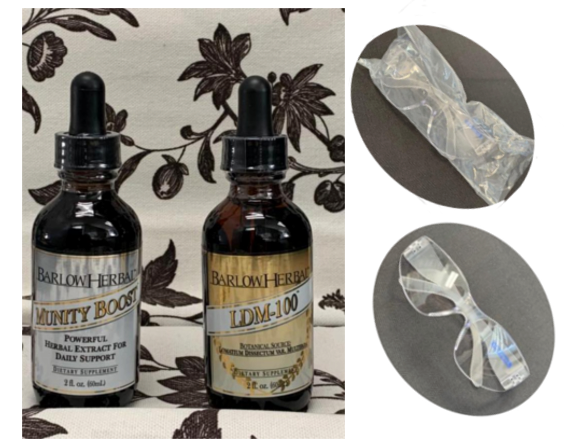
Another thing that has worked for me, for several years, is Barlow Herbal Munity Boost Extract (see above, right).

“MunityBoost is specially formulated to give the immune system extra support with powerful herbal ingredients that are not found in regular food. This herbal extract is most commonly used during the cold & flu season. It has also been found to be especially effective for seasonal allergies.”

A few drops of this wonderful extract gives the immune system an extra boost that can protect the body like a personal suit of armor against viruses and in many cases, even some allergies.

Claremont Colonic is happy to offer these daily support supplements, as well as our line of very discrete goggles to protect your immune system, internally as well as externally, against airborne pathogens. The supplements sell for $32.95 each and the goggles for $3.00 each.

12 Things You Should Never Say to Someone Trying to Lose Weight

12 Things You Should Never Say to Someone Trying to Lose Weight…

Shed these shame-filled statements.

It’s been said that “one is the loneliest number.” But could it be the healthiest, especially when it comes to trying to reach your weight-loss goals? Well, it depends, according to research and the experts we spoke to. One thing is certain though: there are just some things that should never be said to someone who is trying to lose weight, so perhaps keeping your weight-loss plans to yourself isn’t necessarily a bad thing to avoid getting that dreaded weight loss “advice” or feedback you didn’t really ask for.

See, those who have healthy eating and activity support from friends and co-workers lose more weight and keep it off, research in the journal Obesity found—and the opposite is also true (less support and undermining weight-loss strategies leads to more pounds).

“While you might expect friends and family to be totally supportive, it’s not always the case. In fact, I have advised some of my clients to avoid sharing their weight loss intentions with others as they can, in some instances, sabotage them: Bringing treats around, telling them to loosen up and ‘live a little,’ or exhibiting jealousy, which hurts,” says nutritionist Rania Batayneh, M.P.H., the owner of Essential Nutrition For You and the author of The One One One Diet.

If you’re trying to lose weight, what statements should you recognize as shamey or sabotage? And if someone you know is trying to lose weight, what should you never say? From seemingly innocent statements to backhanded compliments to the outright rude, we rounded up all the things you shouldn’t say to someone who is trying to lose weight, according to experts.

“Have you tried the _______ diet? it worked for me.”

Say “ciao” to crash diets, especially when this advice is coming from others, as every person’s weight-loss strategy is different. But one thing is for sure: fad diets aren’t ever a good idea.

“The goal is not to go on the latest fad diet. The goal is the find an approach to healthy eating and activity that can be sustained over time. Diets do not lead to permanent weight reduction without changes in habits and attitudes,” says Bob Wright, director of education at Hilton Head Health in Hilton Head Island, South Carolina.

“You were fine.”

It’s crucial to “avoid statements that doubt the person’s capability to get and stay healthy and avoid implying they will be worse off in any way than when they started,” says Jillian Michaels, a health, wellness, and fitness expert and the creator of the My Fitness by Jillian Michaels app. And this is coming from someone who’s been very public about her health journey—and who has helped some of The Biggest Losers in America.

“Can’t you just be happy at the weight you are at?”

Similarly, this seems like it could be a sort-of compliment, but it’s simply harmful.

“While this may seem like your friend is telling you that you are ‘fine’ the way you are, there is also this tone of ‘Just stop all of this!’ or ‘Why do you keep trying?’ If your friend feels comfortable enough to tell you that they are excited to lose weight but feel it can be challenging to stay consistent, they are probably looking for support, not questioning your intentions,” Batayneh says.

“You look great have you lost weight?”

Wait, haven’t I always looked great?

“This suggests that your friend looked bad before,” Wright says. “Also, there is a chance they haven’t lost weight, and then it would suggest that they need to.”

“Oh, I tried that and it didn’t work for me.”

Think of each weight loss mission like snowflakes: No two are alike.

“Your experiences are unique,” Batayneh says. “For example, perhaps your friend eats healthier carbs rather than eliminating them entirely.” So even if something didn’t work for you, it might for someone else, and it’s not really fair to compare your experiences to someone else who is trying out something new.

“Are you allowed to eat that?”

Nothing needs to be off-limits, and the tone of this question is just very harsh and unnecessary.

“This question is very judgmental; in fact, anyone is allowed to eat what they want! Comments like this often backfire, and their response might be to eat even more than they planned, due to an ‘I’ll show you’ attitude,” Wright says.

“Well now you won’t be fun anymore.”

This is exactly the opposite message you want to send a pal who’s dropping pounds, Michaels clarifies.

“This is discouraging and implies the person will be worse off once they’ve lost the weight,” she says. “Just compliment them. ‘You are so inspiring’ works well. It’s really simple. Compliment their health and their efforts.”

“I can’t really tell that you have lost weight.”

“Can’t.” “Won’t.” Noticing a common theme of negativity here?

“When someone is on a weight loss journey, they feel changes greater than what they see on the scale. Your friend, co-worker, or sibling may have more stable energy, less cravings, or sleep better. If you are negative toward then, this may derail them,” Batayneh says.

Instead, remember to just c’mon, get happy.

“In my practice, I always highlight the positives that my client is accomplishing and is consistent with. We all know when we ate too much, went off on a binge, or just ate totally off plan. It’s in the past, and we can only make better choices ahead,” she adds.

“How much weight did you lose?”

The scale results are only part of the goal, and this question puts the focus solely on weight.

“The rate of weight loss per week varies greatly from person to person. Over the long-run, weight loss is never steady and consistent. Plateaus are a part of every weight loss effort,” Wright says.

Because that’s the case, Wright and the Hilton Head Health crew encourage their guests toward a health pursuit to find non-weight ways to monitor progress. Consider inches lost, speed gained, and more.

“Weight loss is a by-product of changes in behaviors, habits, and attitudes,” he continues.

“I think you looked better heavier.”

“For some people, losing weight is this life-long dream, achievement, and accomplishment. If they have lost weight by working hard, eating right, [and] managing life and social situations, you had better believe that they are proud of themselves,” Batayneh says.

There should never be a reason to hide your hard work.

“Most of us want someone to notice the changes we have experienced physically. I know that we shouldn’t focus on the outward appearance, but when we feel good, we look good,” she says. “If you feel that your waist is smaller and your arms are toned—and you want to show off your hard work—do it!”

“Have you tried eating less?”

Not only is this uber-judgy, but it can also be inaccurate advice—and downright dangerous. Eating too few calories has been proven to cause your body to hold on to weight, plus this statement could be triggering to anyone who has a history of struggling with an eating disorder.

According to research published in the journal Perspectives on Psychological Science, extreme day-to-day calorie restriction can slow metabolism and speed up cravings. Because it’s all about the big picture, and the fact that nearly a million calories need to be consumed per person each year to survive, the scientists suggest looking at larger habits (say, incorporating activity into your day or adding more satisfying, high-protein foods to your diet) rather than counting each and every calorie at a meal.

“The strategy anyone uses to lose weight should guide, not deprive,” Batayneh says.

“You will probably gain this weight back just like you did last time you were on a diet .”

Talk about toxic.

“If someone is saying something passive aggressive, negative, or paying backhanded compliments, try not to take it personally. This is about them projecting their insecurities onto you—and it’s no reflection on you,” Michaels says.


Contributor: Karla Walsh- Eat This, Not That!