The Best Sleepwear May be No Sleepwear. Here’s What Experts Say

The Best Sleepwear May be No Sleepwear. Here’s What Experts Say

Claremont Colonic Center
If you have ever tossed and turned under heavy blankets, you’ve felt firsthand how being too warm can wreck your sleep.
“Temperature is one of the most underappreciated factors in sleep,” said Joseph Dzierzewski, senior vice president of research and scientific affairs at the National Sleep Foundation. “We often hear about light, screens and stress, but even modest changes in temperature and airflow can influence how quickly you fall asleep and how deeply you stay asleep.”

Your core body temperature naturally drops by about 1 to 2 degrees Fahrenheit (about 0.6 to 1 degree Celsius) to fall asleep, he said, and if that cooling process is disrupted even slightly, sleep can become more fragmented and less restorative.

The most important thing is creating what Dzierzewski calls a comfortable sleep microclimate, in which your body isn’t trapping heat between your skin, sleepwear and bedding.

“For some people, that may mean sleeping naked or with minimal clothing; for others, lightweight, moisture-wicking fabrics work well,” he said. The goal is to feel comfortable and secure while helping your body cool naturally.

For Brian Diva Cox in Portland, Oregon, that microclimate is easiest to achieve without pajamas. He said sleeping naked became a nightly habit in his teens and, while it’s more occasional now as an adult, he still does it when he wants to prioritize comfort and recovery — especially on nights when time is short.

“I wake up refreshed,” he said, adding that he invariably has energy and his smart watch’s sleep chart shows his improved sleep quality the next day.

Whether you ditch your pajamas or simply switch to lighter layers, reducing insulation can make it easier for your body to release heat. Interestingly, Dzierzewski also noted that warming the hands and feet before bed can help the body release heat more efficiently and fall asleep faster. For people who naturally have cold extremities, keeping them comfortably warm during sleep can also help maintain more stable sleep.

How much moisture there is in the air matters, too.

“High humidity limits your body’s ability to cool itself through sweat,” he said, so using breathable, moisture-wicking materials in mattresses, bedding and sleepwear can all help your body offload the heat.

Keeping a cooler room, typically around 60 to 67 degrees Fahrenheit (around 15 to 19 degrees Celsius) with good airflow, can also support that process, Dzierzewski explained. Be flexible with those temperatures, since comfort can vary by person and people who sleep hot or are experiencing hormonal changes tend to prefer the cooler end of the range.

Finally, it’s not just about setting a cooler temperature — it’s about keeping it consistent through the night. Big swings can trigger middle-of-the-night wake-ups if you start overheating.

Cooler temps can also impact sperm production

Temperature doesn’t just affect sleep quality — it plays a role in reproductive health, too.

“The testes are outside the body for a reason — optimal sperm production requires temperatures a few degrees below core body temp,” said CNN contributor Dr. Jamin Brahmbhatt, a urologist and robotic surgeon with Orlando Health. That’s why what you choose to wear or not wear to bed can matter.

Brahmbhatt, who is also an assistant professor at the University of Central Florida’s College of Medicine, also referenced a large Harvard University study that showed men who wore boxers had higher sperm concentration than those who wore formfitting styles. But he said the key factor is not the tightness itself, but the heat.

“Tight underwear traps heat against the body,” he explained, echoing the same reasoning around warnings about hot tubs and laptops — the excessive heat. “It’s less about compression and more about the level of insulation,” he said.

The takeaway? Sleeping cooler — whether naked or in breathable clothing — may help reduce heat buildup overnight. Better sleep itself may also support hormone health.

“When men sleep better, testosterone production improves,” he added. Because testosterone is primarily produced during sleep, deeper, more restorative rest can support energy, mood and sexual function. Better sleep leads to a better hormonal balance, which supports libido, he said.

“You don’t have to sleep naked to get these benefits. You just have to sleep cool,” he added. If you do choose to skip the clothes, he advised that it’s important to wash your sheets more frequently.

Intimacy without pressure

Sleeping naked or in minimal clothing with your partner may have perks beyond temperature control.

For some couples, cuddling skin-to-skin becomes a “way of feeling connected and close,” said CNN contributor Ian Kerner, a licensed marriage and family therapist. It doesn’t have to be sexual, he added, but it can help keep a sense of connection alive — and it sometimes creates more opportunity for sex when couples arrive in bed exhausted.

Even when it doesn’t lead to sex, the contact itself can be meaningful. Skin-to-skin touch is associated with oxytocin, a hormone linked to bonding and emotional closeness, he said.

“This is a nice way of showing up in bed without having sexual desire — but potentially getting to desire,” Kerner said. “The couples that I work with who sleep naked, they like it. It becomes a ritual.”

Having the conversation with your partner before you go “no PJs” is critical, and Kerner shared some tips on how to broach the topic. One approach you could take is light and fun, saying “I am going to be sleeping naked tonight. Care to join me?” he said, emphasizing that this doesn’t have to be a sexual thing. Another way is expressing to your partner that you miss intimacy or feeling close and offering getting in bed naked as an option to feel more connected, he said.

For couples trying to reconnect, he sometimes suggests what he calls a “willingness window” — a low-pressure way to prioritize closeness. Partners do not need to show up with desire, just willingness. “Sleeping side by side naked could be a first step,” he said. “You don’t have to make it a habit — even once a week, just to see how it feels.”

While Kerner doesn’t see sleeping naked as a requirement, it could be used as an excuse to get in bed and be naked and without our phones and be human with each other for a little while, he said.

Whether you are ditching pajamas entirely or just switching to lighter fabrics, the goal is the same — helping your body cool down, sleep more deeply and, potentially, feel a little more connected in the process. If you do choose to sleep naked, make sure to keep clothes handy in case of emergencies.


Contributor: Lily Hautau – CNN Health

Adding Seafood to Your Diet Reduces Your Risk of Dying from Heart Disease

Adding Seafood to Your Diet Reduces Your Risk of Dying from Heart Disease

Claremont Colonic Center Newsletter
If you’re like most Americans, you’re not getting the recommended eight ounces of seafood per week; fewer than 22 percent meet this goal. And you may be missing out on an important strategy to improve your health through diet.
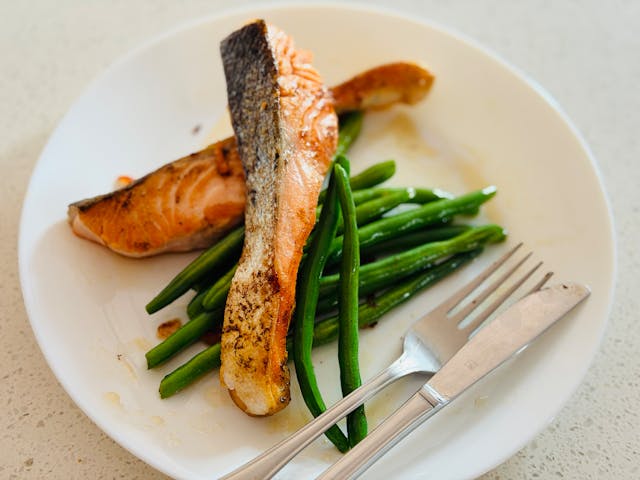
Seafood is a low-saturated-fat protein choice, rich in beneficial nutrients, including vitamin D, selenium and omega-3 fatty acids. Aim for at least two servings of protein-rich, low-saturated-fat seafood every week to boost heart and brain health and enhance mood.

Fishing for Healthy Nutrients

Strong evidence indicates eicosapentanenoic acid (EPA) and docosahexaenoic acid (DHA,) the essential omega-3 fats in fish, can boost heart health, as well as offer protection against depression, dementia and inflammatory disorders, such as asthma and rheumatoid arthritis.

The Dietary Reference Intake (DRI, a daily guide for intake) for omega-3 fats has not been established to date; however, the American Heart Association recommends a total of one gram of EPA plus DHA per day, preferably from oily fish, for those with heart disease. The adult DRI for vitamin D is 600 International Units, and for selenium, 55 micrograms.

Inadequate vitamin D intake is a widespread problem that may increase the risk of several diseases, including osteoporosis, infectious disease, heart disease, cancer, and seasonal flu. Poor selenium intake is linked with autism, Alzheimer’s disease, rheumatoid arthritis, and asthma.

A Sea of Benefits

Here’s a look at the latest evidence on seafood and health:

1. Heart health. Both the U.S. Department of Agriculture’s Dietary Guidelines for Americans 2010 and the American Heart Association recommend that you eat at least two servings of fish each week. Research shows that regular consumption of fish reduces the risk of dying from heart disease by 36 percent.

2. Pregnancy. The intake of omega-3s during pregnancy plays an important role in infant brain development and health. This is why the Dietary Guidelines call for women who are pregnant or breastfeeding to eat eight to 12 ounces of seafood per week. According to U.S. seafood consumption statistics, most pregnant women do not consume the recommended intake of seafood, thus they are not likely to obtain enough omega-3s in their diet.

Concerns about mercury contamination have led to both fear and confusion regarding the safety of eating fish during pregnancy. However, it’s been established that benefits outweigh potential risks.

3. Mood and brain health. It’s no surprise that seafood, a rich source of omega-3, has earned a reputation as “brain food.” Research continues to illustrate possible benefits of omega-3s in the treatment of mental disorders, including depression, Alzheimer’s disease, and neuropsychiatric disorders.

DHA is a major structural fat in the human brain, representing about 97 percent of all the brain’s omega-3 fats, and plays an important role in memory, brain performance, and behavioral function.

Benefits Outweigh Potential Risks

With so many benefits linked with eating seafood, why are people missing out on this opportunity for better health? Sylvia Geiger, M.S., R.D., registered dietitian specializing in seafood and health, spoke at the Supermarket RD Symposium in Savannah, Ga., in March.

“The nutritional benefits are overshadowed by fear of environmental contaminants, including methylmercury, dioxins and polychlorinated biphenyls (PCBs) potentially found in seafood sources, and confusion about sustainability,” Geiger reported.

But a 2006 study published in the Journal of the American Medical Association by Harvard researchers provided a poignant example quantifying the potential health benefits vs. risks for consuming seafood: The study projected that if 100,000 people ate farmed or wild salmon twice a week for 70 years, nearly 7,100 lives might be saved as a result of cardiovascular disease protection.

At the same time, only 24 deaths might result due to exposure to potential contaminants. The researchers concluded that it is far riskier to forgo the healthful nutrients derived from eating seafood than it is to avoid seafood due to fear of contaminants.

If your body has sufficient selenium to maintain proper function, the risks for mercury are mitigated, according to the Energy and Environmental Research Center, Grand Forks, N.D. Seafood is among 17 of the top 25 sources of dietary selenium consumed in the U.S.; thus, people who maintain optimal intake levels of selenium may reduce their risk of mercury exposure.


Contributor: – Barbara Ruhs, M.S., R.D., L.D.N., – Alternative Daily